
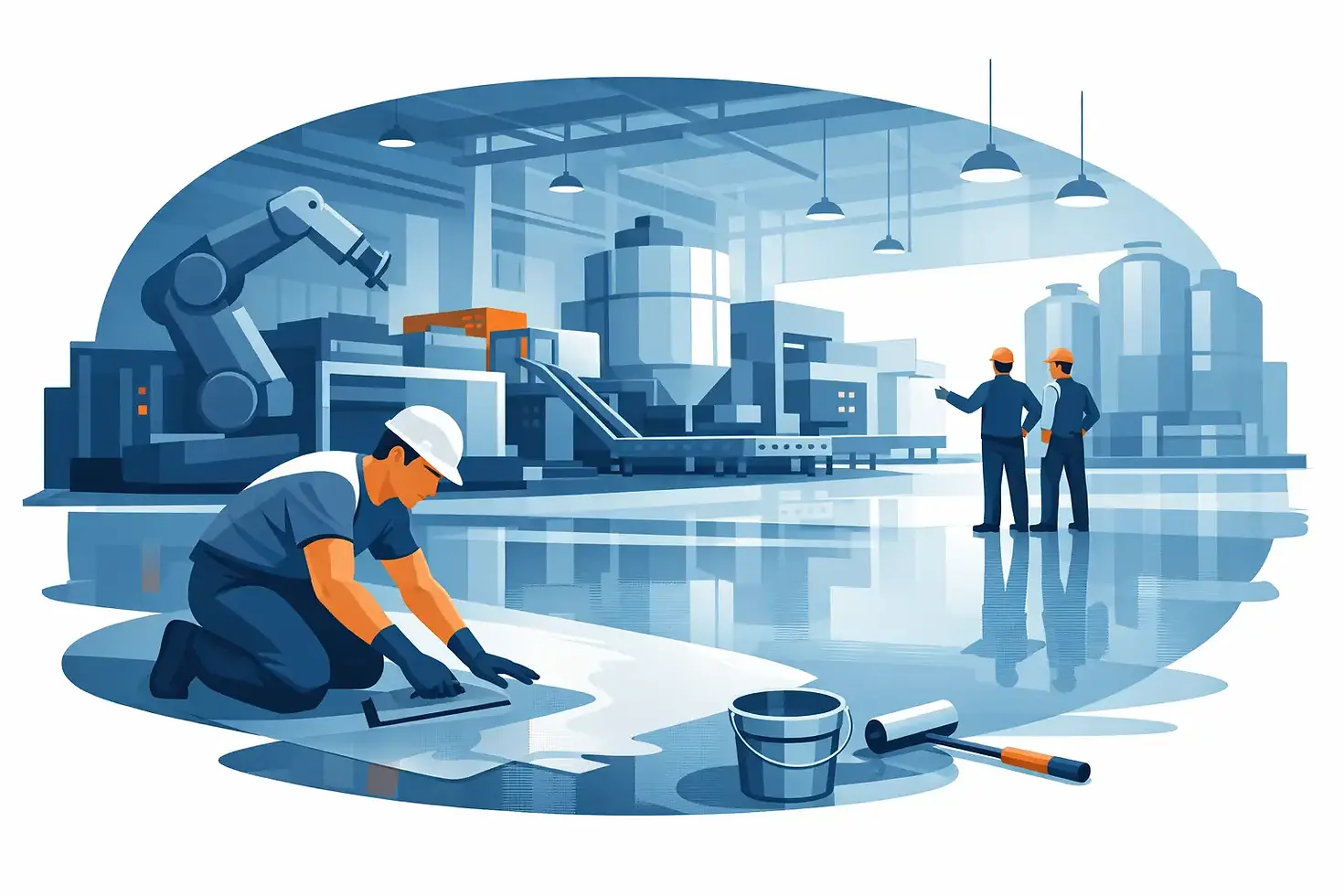
Industrial Epoxy Flooring Systems Built to Last

A forklift lane that starts peeling within a year is not a coating problem alone. It is usually a preparation, moisture, or adhesion problem that was buried under a shiny finish. Industrial epoxy flooring systems are built to prevent that kind of expensive disappointment, but only when the system is selected and installed for the conditions it will actually face.
For warehouses, shops, commercial kitchens, manufacturing areas, showrooms, and hard-working garages, the floor has a job to do. It must hold up under traffic, dropped tools, chemical spills, rolling loads, abrasion, and constant cleaning without becoming a maintenance headache. Don’t settle for a thin surface treatment that looks good at first and fails when the work begins.
What Industrial Epoxy Flooring Systems Are Designed to Do
An industrial epoxy floor is more than paint applied to concrete. It is a multi-layer resin system designed to bond to a properly prepared slab, protect it from damage, and create a cleaner working surface. Depending on the facility, the finished system may include a penetrating primer, a high-build epoxy base coat, decorative or functional broadcast media, and a protective topcoat.
The real value is in the bond. Concrete is porous, and a lasting floor coating has to become part of that surface rather than simply sit on top of it. At Forever Garage Floors, deep-penetrating wicking technology is used to drive material into the concrete profile for stronger adhesion. That matters because peeling and chipping often begin where an installer left contamination, weak concrete, or an insufficient surface profile behind.
A properly specified epoxy system can help reduce dusting, staining, concrete wear, and cleanup time. It can also define work zones, improve brightness in the space, and give customers or employees a cleaner impression of the operation. Those benefits are real, but durability still comes first.
The Floor Is Only as Strong as Its Preparation
The most durable coating product cannot compensate for careless prep. Before an industrial coating is installed, the concrete needs a serious evaluation. Oil saturation, old adhesives, curing compounds, failed coatings, cracks, spalling, moisture pressure, and soft concrete can all affect the final result.
Mechanical grinding is generally the right starting point because it opens the pores of the concrete and creates a profile for the coating to grip. Acid washing may appear easier, but it does not reliably remove deeply embedded contaminants or produce the consistent surface needed for demanding industrial use. A contractor should not apply a premium system over an unprepared slab just to finish the job faster.
Cracks and damaged areas also need attention before coating begins. Not every crack can be made invisible, especially active cracks that continue to move with the slab. Honest installation means addressing the damage, explaining what can be repaired, and setting the right expectation for appearance and long-term performance.
Moisture Is Not a Detail to Ignore
Concrete can release moisture vapor long after it looks dry. When that vapor pressure is excessive, it can push against the coating and lead to blistering, debonding, or peeling. This is particularly common in ground-level slabs, older buildings, and spaces with poor drainage or changing humidity.
A professional installer evaluates the slab before recommending a system. In some cases, a moisture-mitigating primer or another coating approach may be necessary. In others, the source of water must be corrected first. Applying epoxy over an unresolved moisture issue is not a solution. It is a delayed failure.
Choosing the Right System for the Workload
Not all industrial epoxy flooring systems need the same thickness, texture, or topcoat. The right choice depends on how the area is used, what is spilled, how often it is cleaned, and whether appearance matters as much as impact resistance.
A light commercial showroom may benefit from a decorative flake system that provides a clean, professional finish and hides everyday dust. A warehouse with pallet jacks and heavy carts may need a thicker build with a textured surface in travel lanes. A service bay, fabrication shop, or chemical handling area may require added resistance to oils, fuels, solvents, or specific chemicals.
Epoxy is an excellent material for build thickness, adhesion, and long-term concrete protection. However, it is not always the complete answer by itself. Epoxy can discolor under direct UV exposure, which is why exterior areas or spaces with strong sunlight may benefit from polyaspartic or polyurea topcoats. Those materials can also offer faster cure times and strong abrasion resistance.
That does not mean one product is automatically better than another. It means the coating system should match the job. A contractor who recommends the same coating for every garage, warehouse, patio, and industrial facility is selling convenience, not performance.
Where Industrial Floors Commonly Fail
Most premature failures trace back to a few predictable shortcuts. The coating may have been installed over a smooth or contaminated slab. The crew may have skipped moisture testing. The material may have been too thin for the traffic load, or the installer may have rushed cure times between coats.
Other failures come from choosing appearance over function. A glossy floor without enough texture can become slick when wet. A decorative finish may look sharp, but it needs the right topcoat and aggregate selection for a work area where water, oil, or cleaning solutions are present. A floor that is too aggressively textured, on the other hand, can trap dirt and make cleanup harder.
The best floor is not always the thickest or the shiniest. It is the one designed for the actual environment and installed with no shortcuts in surface preparation, repairs, material selection, or cure time.
Performance Features That Make a Difference
A well-built industrial floor should do more than cover concrete. It should make the space easier to operate and easier to maintain. When comparing proposals, ask how the system addresses these practical demands:
Adhesion to mechanically prepared concrete, not just a clean-looking surface
Resistance to abrasion from carts, tools, tires, and regular foot traffic
Protection from oils, automotive fluids, cleaners, and job-specific chemical exposure
Texture that supports safer footing without turning the floor into a dirt trap
A finish that can be repaired or recoated correctly if the facility changes over time
The answers should be specific. “Industrial grade” is not enough by itself. Ask what materials will be used, how the slab will be prepared, how cracks will be handled, and whether the system is appropriate for the traffic and exposure in your building.
A Better Floor Means Less Ongoing Work
Uncoated concrete slowly breaks down under traffic and contamination. It can dust, stain, absorb fluids, and develop rough areas that are harder to clean. Once that damage progresses, maintenance costs rise and the facility starts to look neglected, even when the rest of the operation is well run.
A professionally installed coating creates a more controlled surface. Spills are easier to spot and clean. Dust from deteriorating concrete is reduced. Marked areas and cleaner finishes can improve organization in work zones. For commercial spaces that receive customers, a quality floor also communicates that the business takes care of its equipment and its property.
There is a financial side to this as well. The cheapest installation can become the most expensive one when it peels, requires removal, interrupts operations, and forces the owner to pay for the job twice. Long-term value comes from doing the concrete preparation and coating installation correctly the first time.
Start With an Honest Assessment of Your Concrete
Before selecting colors or finish options, start with the slab. Its condition, moisture level, past use, traffic pattern, and exposure risks should determine the system. That process may reveal that epoxy is the right foundation, that a polyaspartic or polyurea topcoat makes sense, or that repairs and moisture control need to happen first.
A floor should not become another item on the repair list. If your concrete is showing wear, stains, chips, dusting, or failed old coating, a professional evaluation can identify the cause and build a surface designed to stay put. Request a free estimate from Forever Garage Floors and put your facility on a floor built for the work ahead.


Comments