
Commercial Concrete Floor Coatings That Last

A commercial floor has no room for a coating that looks good for six months and then starts peeling where the work happens. Commercial concrete floor coatings must stand up to forklift traffic, rolling carts, dropped tools, chemical spills, foot traffic, moisture, and constant cleaning without turning into another maintenance problem.
That starts below the surface. The coating itself matters, but the preparation, moisture conditions, concrete profile, and installation method determine whether the finished floor becomes a long-term asset or a costly redo. Don't settle for a thin surface treatment that cannot hold on when your operation puts it under real pressure.
What Commercial Floors Are Up Against
Commercial and industrial concrete rarely gets an easy life. A warehouse floor may carry loaded pallet jacks all day. An automotive service bay sees oil, brake fluid, hot tires, and metal tools. A restaurant back-of-house area needs regular washing and dependable traction. Retail, medical, showroom, and mixed-use spaces each bring their own demands for appearance, cleaning, and daily traffic.
Bare concrete absorbs. It takes in oil, water, chemicals, and grime, then becomes harder to clean and more likely to stain. Over time, surface dusting, chipping, cracking, and worn traffic lanes can make a facility look neglected even when the business is well run.
A professionally installed coating system creates a dense, finished surface that is easier to maintain and far more presentable. But commercial performance is not just about a glossy finish. The right system needs to bond aggressively to prepared concrete, handle the environment, and fit how the space is actually used.
Why Commercial Concrete Floor Coatings Fail
Most failed floors do not fail because the owner picked the wrong color. They fail because the coating was applied over a weak, contaminated, smooth, or moisture-affected slab. Paint-store kits and rushed installations commonly sit on top of the concrete rather than becoming part of a properly prepared surface.
Peeling often begins at tire paths, doorways, expansion joints, wash-down areas, and other high-stress locations. Once an edge lifts, moisture and contaminants can work underneath the coating. What began as a small cosmetic issue can quickly become a larger repair area.
The common causes are straightforward: inadequate mechanical grinding, poor crack and joint treatment, skipped moisture testing, improper product selection, and installation in unsuitable temperatures or humidity. A floor may look finished on installation day while carrying the conditions for failure underneath it.
At Forever Garage Floors, the goal is not to cover concrete and hope for the best. Industrial-grade systems are installed with deep-penetrating wicking technology designed to drive adhesion into the concrete. That difference matters when a floor must perform under real commercial use, not just look clean for a photo.
Choose the System Based on Use, Not Hype
Epoxy, polyaspartic, and polyurea coatings all have a place in commercial settings. The best option depends on traffic, exposure, downtime, slab condition, and the finish the facility needs. A contractor who recommends the same coating for every building is simplifying a decision that deserves more attention.
Epoxy for Build and Chemical Resistance
Epoxy is often chosen for its substantial build, attractive finish, and strong resistance to many common shop and industrial exposures. It can be an excellent foundation in a multi-coat system, especially where a thicker protective layer is needed.
The trade-off is cure time and sensitivity to installation conditions. Some epoxy systems require longer downtime before the floor can return to service. They can also yellow when exposed to direct UV light, making them less suitable as a stand-alone choice for sunlit entries, open bays, or exterior-adjacent spaces.
Polyaspartic for Faster Return to Service
Polyaspartic coatings cure quickly and offer excellent UV stability, which helps them maintain color in bright spaces. For businesses that cannot shut down an area for several days, a properly planned polyaspartic system can reduce disruption substantially.
Fast cure does not mean shortcuts. Surface preparation still controls adhesion, and the installer needs the experience to work within the product's cure window. In the right setting, polyaspartic systems provide a hard-wearing, cleanable floor with a faster path back to business.
Polyurea for Tough, Flexible Protection
Polyurea systems are valued for fast cure, strong adhesion, and flexibility that can help the coating move with normal concrete changes. They are a serious option for demanding floors where impact resistance and long-term bond strength are priorities.
The right commercial system may use one material throughout or combine compatible products in layers. The specification should follow the floor's exposure, not a sales script. Heavy equipment, chemical contact, direct sunlight, thermal cycling, moisture conditions, and required downtime all affect that decision.
Preparation Is Where Permanent Value Begins
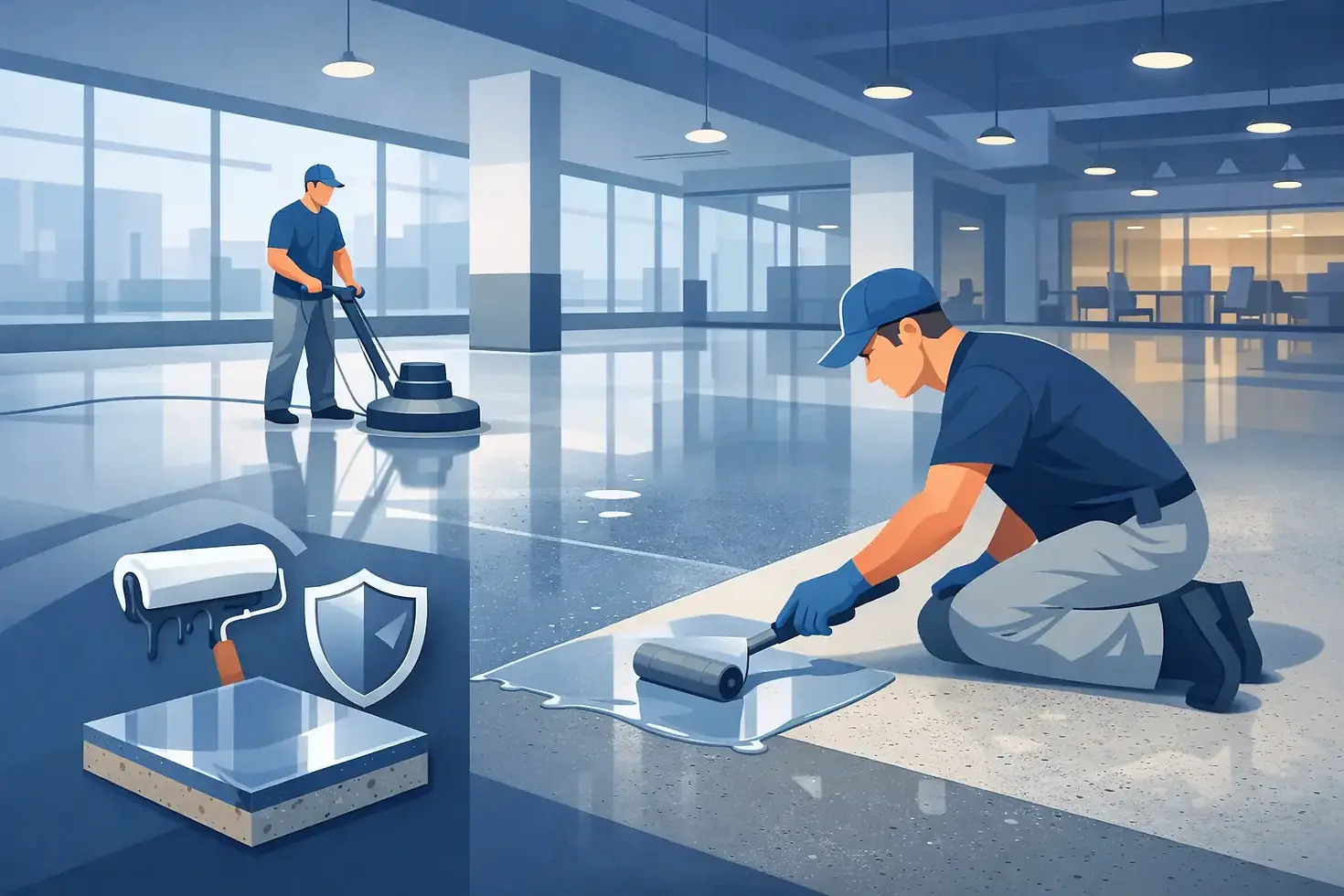
A quality commercial coating installation starts with an honest evaluation of the slab. Old coatings, sealers, oils, adhesive residue, weak concrete, and moisture cannot be ignored. They must be addressed before a new system goes down.
Mechanical diamond grinding creates the concrete surface profile needed for the coating to anchor. This is not the same as simply acid etching or washing the floor. Grinding opens the concrete properly, removes weak surface material, and gives the installer a clear view of cracks, spalls, and contaminated areas that need repair.
Cracks and damaged sections should be repaired with materials suited to the coating system and the movement expected in the slab. Expansion and control joints also need to be handled correctly. Some joints must remain functional rather than being filled solid and treated as decorative lines. This is where field experience protects the floor from avoidable cracking later.
Moisture deserves the same respect. Concrete can release vapor even when it appears dry on top. If moisture pressure is not evaluated and managed, it can attack the coating bond from below. A professional assessment identifies risks before they become a peeling-floor problem after the crew has left.
Design a Floor That Works Hard and Cleans Easily
Commercial flooring should support the work, not complicate it. Decorative flake systems can hide dirt and minor scuffs better than a solid color while giving showrooms, service areas, and customer-facing spaces a finished appearance. Solid-color systems can create a clean, uniform look for utility rooms, storage areas, and industrial zones.
Texture is another practical choice. A smoother finish may be easier to mop, while a broadcast texture can improve traction in areas exposed to water, oils, or frequent wash-downs. More texture is not always better, because overly aggressive surfaces can hold dirt and make cleaning harder. The right balance depends on the shoes, wheels, liquids, and cleaning methods used in the space.
Color should also serve the facility. Lighter tones can brighten enclosed work areas. Medium or patterned finishes can be more forgiving in high-traffic zones. Safety markings, walkways, work cells, and designated storage areas may require special planning so the floor supports efficient operations as well as a professional appearance.
Plan Installation Around Downtime
The best coating system is one your business can install without creating unnecessary operational risk. Before work begins, identify access routes, equipment staging, cure times, ventilation needs, and when the space must return to foot traffic, rolling loads, or vehicle traffic.
A floor that handles employees walking on it may not yet be ready for a loaded forklift. A coating that is ready for light service may need additional cure time before chemical exposure or heavy point loads. Clear expectations prevent premature use from damaging a newly installed floor.
For larger facilities, phased installation can keep portions of the operation moving. The contractor should understand where traffic bottlenecks occur and which areas cannot be taken offline at the same time. That planning is part of professional workmanship, not an optional extra.
Get More Life From the Finished Floor
Even industrial-strength commercial concrete floor coatings benefit from basic care. Sweep abrasive grit before it acts like sandpaper under wheels. Wipe up oil and chemical spills promptly. Use cleaning products appropriate for the coating rather than harsh chemicals that leave residue or dull the finish.
Inspect the floor periodically around entrances, equipment lanes, drains, joints, and loading areas. Catching isolated damage early is simpler than allowing moisture or impact damage to spread under a larger section. A well-installed system reduces maintenance, but it should still be treated as a working surface with a job to do.
The right commercial floor is not the cheapest coating applied fastest. It is the system built around your slab, your traffic, and your schedule, installed with the preparation and adhesion needed to stay put. Start with a clear assessment of how your facility uses its concrete, then choose a solution that gives the space the strength, cleaner appearance, and lasting confidence it deserves.


Comments